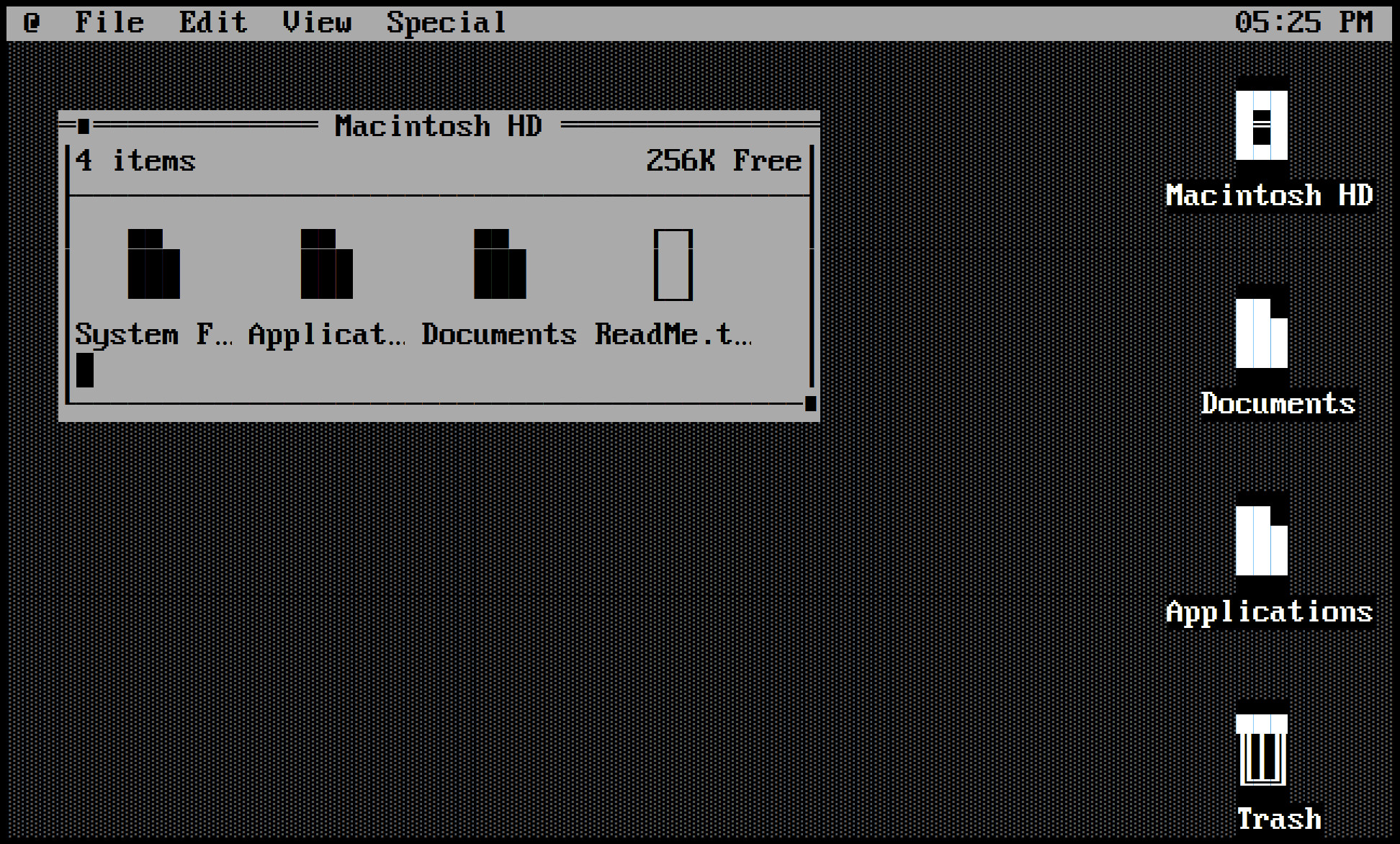
Since November, I have used Claude Code and Claude Opus 4.5 through a personal Claude Max account to extensively experiment with AI-assisted software development (I have also used OpenAI’s Codex in a similar way, though not as frequently). Fifty projects later, I’ll be frank: I have not had this much fun with a computer since I learned BASIC on my Apple II Plus when I was 9 years old. This opinion comes not as an endorsement but as personal experience: I voluntarily undertook this project, and I paid out of pocket for both OpenAI and Anthropic’s premium AI plans. (View Highlight)
Claude Code, Codex, and Google’s Gemini CLI, can seemingly perform software miracles on a small scale. They can spit out flashy prototypes of simple applications, user interfaces, and even games, but only as long as they borrow patterns from their training data. Much like a 3D printer, doing production-level work takes far more effort. Creating durable production code, managing a complex project, or crafting something truly novel still requires experience, patience, and skill beyond what today’s AI agents can provide on their own. (View Highlight)
And yet these tools have opened a world of creative potential in software that was previously closed to me, and they feel personally empowering. Even with that impression, though, I know these are hobby projects, and the limitations of coding agents lead me to believe that veteran software developers probably shouldn’t fear losing their jobs to these tools any time soon. In fact, they may become busier than ever. (View Highlight)
Even with the best AI coding agents available today, humans remain essential to the software development process. Experienced human software developers bring judgment, creativity, and domain knowledge that AI models lack. They know how to architect systems for long-term maintainability, how to balance technical debt against feature velocity, and when to push back when requirements don’t make sense. (View Highlight)
For hobby projects like mine, I can get away with a lot of sloppiness. But for production work, having someone who understands version control, incremental backups, testing one feature at a time, and debugging complex interactions between systems makes all the difference. Knowing something about how good software development works helps a lot when guiding an AI coding agent—the tool amplifies your existing knowledge rather than replacing it. (View Highlight)
As independent AI researcher Simon Willison wrote in a post distinguishing serious AI-assisted development from casual “vibe coding,” “AI tools amplify existing expertise. The more skills and experience you have as a software engineer the faster and better the results you can get from working with LLMs and coding agents.” (View Highlight)
So I like to remind myself that coding agents are software tools best used to enact human ideas, not autonomous coding employees. They are not people (and not people replacements) no matter how the companies behind them might market them. (View Highlight)
If you think about it, everything you do on a computer was once a manual process. Programming a computer like the ENIAC involved literally making physical bits (connections) with wire on a plugboard. The history of programming has been one of increasing automation, so even though this AI-assisted leap is somewhat startling, one could think of these tools as an advancement similar to the advent of high-level languages, automated compilers and debugger tools, or GUI-based IDEs. They can automate many tasks, but managing the overarching project scope still falls to the person telling the tool what to d (View Highlight)
And they can have rapidly compounding benefits. I’ve now used AI tools to write better tools—such as changing the source of an emulator so a coding agent can use it directly—and those improved tools are already having ripple effects. But a human must be in the loop for the best execution of my vision. This approach has kept me very busy, and contrary to some prevailing fears about people becoming dumber due to AI, I have learned many new things along the way. (View Highlight)
Due to what might poetically be called “preconceived notions” baked into a coding model’s neural network (more technically, statistical semantic associations), it can be difficult to get AI agents to create truly novel things, even if you carefully spell out what you want. (View Highlight)
ecause with LLMs, context is everything, and in language, context changes meaning. Take the word “bank” and add the words “river” or “central” in front of it, and see how the meaning changes. In a way, words act as addresses that unlock the semantic relationships encoded in a neural network. So if you put “checkerboard” and “game” in the context, the model’s self-attention process links up a massive web of semantic associations about how checkers games should work, and that semantic baggage throws things off. (View Highlight)
A couple of tricks can help AI coders navigate around these limitations. First, avoid contaminating the context with irrelevant information. Second, when the agent gets stuck, try this prompt: “What information do you need that would let you implement this perfectly right now? What tools are available to you that you could use to discover that information systematically without guessing?” This forces the agent to identify (semantically link up) its own knowledge gaps, spelled out in the context window and subject to future action, instead of flailing around blindly. (View Highlight)
The first 90 percent of an AI coding project comes in fast and amazes you. The last 10 percent involves tediously filling in the details through back-and-forth trial-and-error conversation with the agent. Tasks that require deeper insight or understanding than what the agent can provide still require humans to make the connections and guide it in the right direction. The limitations we discussed above can also cause your project to hit a brick wall. (View Highlight)
From what I have observed over the years, larger LLMs can potentially make deeper contextual connections than smaller ones. They have more parameters (encoded data points), and those parameters are linked in more multidimensional ways, so they tend to have a deeper map of semantic relationships. As deep as those go, it seems that human brains still have an even deeper grasp of semantic connections and can make wild semantic jumps that LLMs tend not to. (View Highlight)
Feature creep becomes irresistible
While creating software with AI coding tools, the joy of experiencing novelty makes you want to keep adding interesting new features rather than fixing bugs or perfecting existing systems. And Claude (or Codex) is happy to oblige, churning away at new ideas that are easy to sketch out in a quick and pleasing demo (the 90 percent problem again) rather than polishing the code. (View Highlight)
Fixing bugs can also create bugs elsewhere. This is not new to coding agents—it’s a time-honored problem in software development. But agents supercharge this phenomenon because they can barrel through your code and make sweeping changes in pursuit of narrow-minded goals that affect lots of working systems. We’ve already talked about the importance of having a good architecture guided by the human mind behind the wheel above, and that comes into play here. (View Highlight)
While using Claude Code for a while, it’s easy to take for granted that you suddenly have the power to create software without knowing certain programming languages. This is amazing at first, but you can quickly become frustrated that what is conventionally a very fast development process isn’t fast enough. Impatience at the coding machine sets in, and you start wanting more. (View Highlight)
But even if you do know the programming languages being used, you don’t get a free pass. You still need to make key decisions about how the project will unfold. And when the agent gets stuck or makes a mess of things, your programming knowledge becomes essential for diagnosing what went wrong and steering it back on course. (View Highlight)
After guiding way too many hobby projects through Claude Code over the past two months, I’m starting to think that most people won’t become unemployed due to AI—they will become busier than ever. Power tools allow more work to be done in less time, and the economy will demand more productivity to match. (View Highlight)
It’s almost too easy to make new software, in fact, and that can be exhausting. One project idea would lead to another, and I was soon spending eight hours a day during my winter vacation shepherding about 15 Claude Code projects at once. That’s too much split attention for good results, but the novelty of seeing my ideas come to life was addictive. In addition to the game ideas I’ve mentioned here, I made tools that scrape and search my past articles, a graphical MUD based on ZZT, a new type of MUSH (text game) that uses AI-generated rooms, a new type of Telnet display proxy, and a Claude Code client for the Apple II (more on that soon). I also put two AI-enabled emulators for Apple II and Atari 800 on GitHub. Phew. (View Highlight)
Consider the advent of the steam shovel, which allowed humans to dig holes faster than a team using hand shovels. It made existing projects faster and new projects possible. But think about the human operator of the steam shovel. Suddenly, we had a tireless tool that could work 24 hours a day if fueled up and maintained properly, while the human piloting it would need to eat, sleep, and rest.
(View Highlight)
In fact, we may end up needing new protections for human knowledge workers using these tireless information engines to implement their ideas, much as unions rose as a response to industrial production lines over 100 years ago. Humans need rest, even when machines don’t.
Will an AI system ever replace the human role here? Even if AI coding agents could eventually work fully autonomously, I don’t think they’ll replace humans entirely because there will still be people who want to get things done, and new AI power tools will emerge to help them do it. (View Highlight)
AI coding tools can turn what was once a year-long personal project into a five-minute session. I fed Claude Code a photo of a two-player Tetris game I sketched in a notebook back in 2008, and it produced a working prototype in minutes (prompt: “create a fully-featured web game with sound effects based on this diagram”). That’s wild, and even though the results are imperfect, it’s a bit frightening to comprehend what kind of sea change in software development this might entail. (View Highlight)
Since early December, I’ve been posting some of my more amusing experimental AI-coded projects to Bluesky for people to try out, but I discovered I needed to deliberately slow down with updates because they came too fast for people to absorb (and too fast for me to fully test). I’ve also received comments like “I’m worried you’re using AI, you’re making games too fast” and so on. (View Highlight)
Regardless of my own habits, the flow of new software will not slow down. There will soon be a seemingly endless supply of AI-augmented media (games, movies, images, books), and that’s a problem we’ll have to figure out how to deal with. These products won’t all be “AI slop,” either; some will be done very well, and the acceleration in production times due to these new power tools will balloon the quantity beyond anything we’ve seen. (View Highlight)
Social media tends to prime people to believe that AI is all good or all bad, but that kind of black-and-white thinking may be the easy way out. You’ll have no cognitive dissonance, but you’ll miss a far richer third option: seeing these tools as imperfect and deserving of critique but also as useful and empowering when they bring your ideas to life.
AI agents should be considered tools, not entities or employees, and they should be amplifiers of human ideas. My game-in-progress Card Miner is entirely my own high-level creative design work, but the AI model handled the low-level code. I am still proud of it as an expression of my personal ideas, and it would not exist without AI coding agents. (View Highlight)
For now, at least, coding agents remain very much tools in the hands of people who want to build things. The question is whether humans will learn to wield these new tools effectively to empower themselves. Based on two months of intensive experimentation, I’d say the answer is a qualified yes, with plenty of caveats. (View Highlight)
We also have social issues to face: Professional developers already use these tools, and with the prevailing stigma against AI tools in some online communities, many software developers and the platforms that host their work will face difficult decisions. (View Highlight)
Ultimately, I don’t think AI tools will make human software designers obsolete. Instead, they may well help those designers become more capable. This isn’t new, of course; tools of every kind have been serving this role since long before the dawn of recorded history. The best tools amplify human capability while keeping a person behind the wheel. The 3D printer analogy holds: amazing fast results are possible, but mastery still takes time, skill, and a lot of patience with the machine. (View Highlight)