Most agentic architecture mistakes start with a simple misread of the problem. Developers often pick a pattern based on what looks impressive or familiar, not what the task actually needs. A multi-agent system from a talk can look like the “right” answer, so they spend weeks building orchestration for something a single well-prompted agent with a couple of tools could handle in a day. Or they go the other direction, keep things too simple, and only discover in production that the system can’t adapt or scale, forcing a redesign under pressure. (View Highlight)
Pattern selection is where the real design work happens. The agentic design patterns themselves are well documented. What is less documented is the decision logic for choosing between them. That logic is what this article is about. (View Highlight)
The approach here is a decision tree: a series of questions about your task, your constraints, and your acceptable trade-offs that leads you to the right starting pattern. The tree doesn’t produce a final answer; agent architectures evolve as feedback accumulates. But it gives you a principled starting point, and it makes the reasoning behind your choice clear enough to revisit when things change. (View Highlight)
Here are some of them:
• ReAct pattern treats the next best action as not fully knowable in advance, and relies on combining reasoning with tool use at each step to improve decisions.
• Planning is based on the idea that the major structure of the task can be identified upfront, and that defining an execution roadmap improves downstream reliability.
• Reflection pattern is grounded in the expectation that first-pass outputs are often incomplete or flawed, and that iterative self-critique and refinement improve final quality enough to justify the added cost.
• Multi-agent approaches operate on the belief that the task benefits from decomposition into specialized roles, where parallel or modular execution outweighs the overhead of coordination. (View Highlight)
When these assumptions match the task, the pattern adds real value. When they don’t, it adds overhead without improving results. For instance, planning can become rigid when task structure only emerges during execution, reflection can waste resources on simple queries, and multi-agent setups can add unnecessary complexity for problems a single agent can solve. (View Highlight)
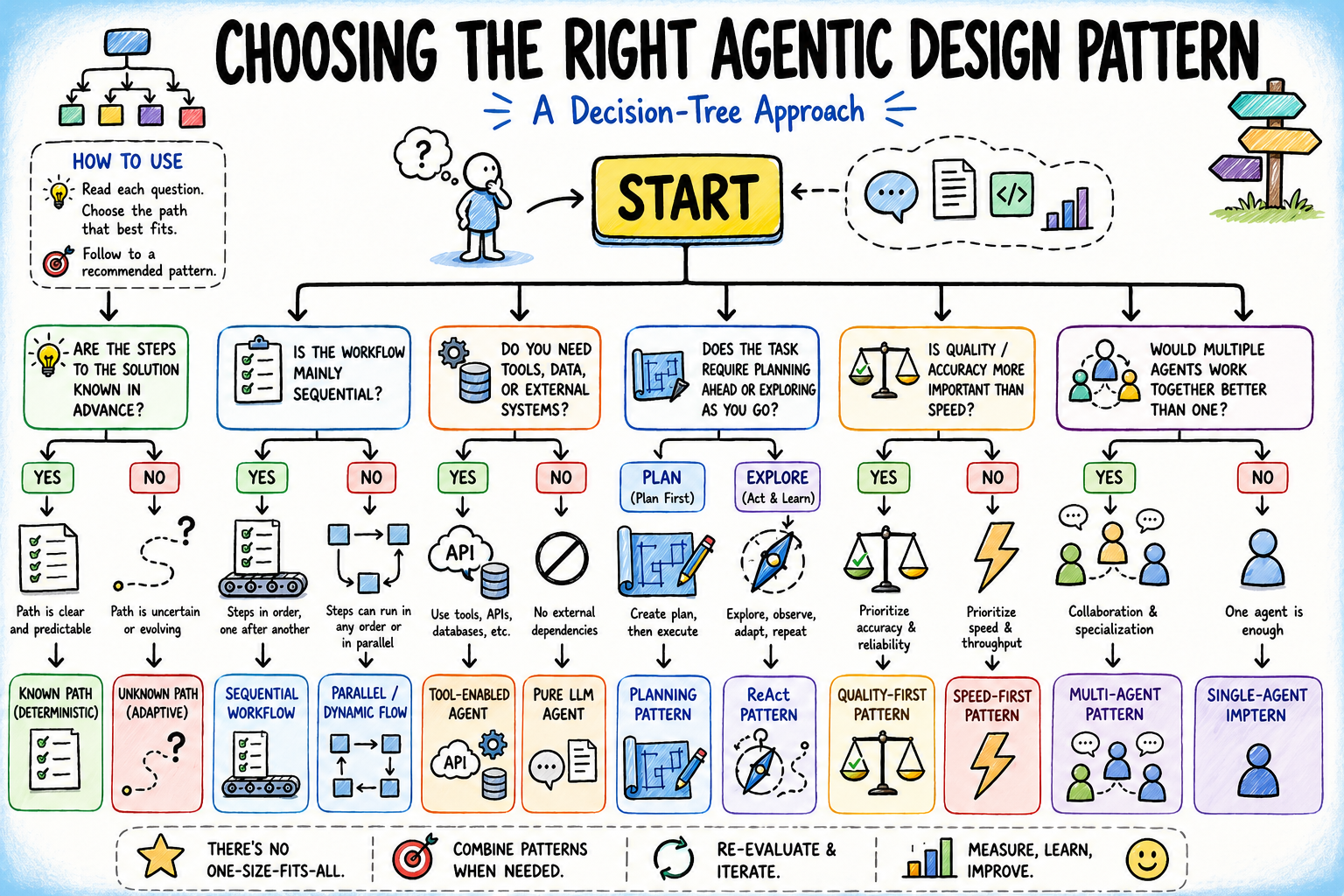 (View Highlight)