OpenAI and Anthropic are racing toward potentially record-breaking initial public offerings by the end of the year.
An inside look at the financials of both companies prior to funding rounds completed earlier this year shows their Achilles’ heel: the soaring costs needed to train new artificial intelligence models.
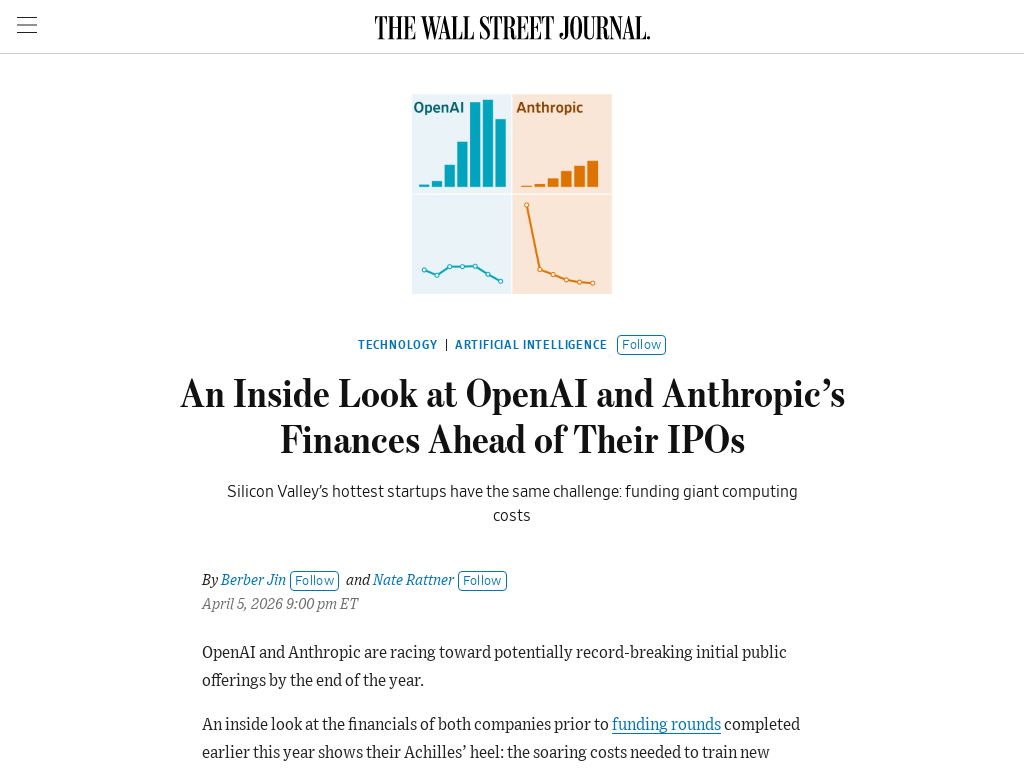
OpenAI expects to spend 121billiononcomputingpowerforAIresearchin2028.Thatmeansthecompanyanticipatesburning85 billion that year even after almost doubling sales from the prior year. Such losses would dwarf those of virtually any other public company in history. Anthropic doesn’t expect to spend nearly as much, but its rosiest forecasts tell a similar story of mounting computing costs. (View Highlight)
Both companies are releasing new versions of their AI models at a faster cadence than ever before, while pouring more resources into the training runs that create them. The arms race is showing no signs of slowing.
Below are charts drawn from confidential financial documents that both companies shared with investors ahead of their latest funding rounds. They offer a window into the economics of the two largest AI labs in the world. The Information earlier reported some of the figures. (View Highlight)
Yearly AI model training costs…
…in billions of dollars…
OpenAI
Anthropic
125PROJECTIONS10075502502024203020242030...andasashareofrevenueOpenAIAnthropic40030020010002024203020242030...inbillionsofdollars...OpenAIAnthropic125
PROJECTIONS
100
75
50
25
0
2024
2030
2024
2030
…and as a share of revenue
OpenAI
Anthropic
%
400
300
200
100
0
2024
2030
2024
2030
…in billions of dollars…
OpenAI
Anthropic
$125
PROJECTIONS
100
75
50
25
0
2024
2030
2024
2030
…and as a share of revenue
OpenAI
Anthropic
400
%
300
200
100
0
2024
2030
2024
2030
Note: Anthropic’s 2025 figure is an estimate. OpenAI’s projections are through 2030; Anthropic’s are through 2029. (View Highlight)
The costs are set to be so mind-bogglingly high that both companies report two different measures of profitability—one that includes training costs, and one that leaves them out.
Strip out “compute for research,” and OpenAI is actually on track to turn a small pretax operating profit this year, as is Anthropic under its best-case scenario. Add it back in, and OpenAI doesn’t expect to break even until the 2030s. Anthropic forecasts reaching that milestone sooner.
An OpenAI spokesperson said the company is giving priority to growth over profits, and could dial back spending on training but expects a strong return on investment. (View Highlight)
Profit, in billions, yearly
OpenAI
Anthropic
150PROJECTIONSProfitexcludingmodeltrainingcosts100500−50Includingtrainingcosts−1002024203020242030OpenAIAnthropic150
PROJECTIONS
Profit excluding
model training costs
100
50
0
−50
Including
training costs
−100
2024
2030
2024
2030
OpenAI
Anthropic
$150
PROJECTIONS
Profit excluding
model training costs
100
50
0
−50
Including
training costs
−100
2024
2030
2024
2030
Note: Anthropic’s 2025 figure is an estimate. OpenAI’s projections are through 2030; Anthropic’s are through 2029. Both OpenAI and Anthropic report two versions of their earnings—one that includes training costs, and one that excludes them. Anthropic reports earnings before interest, taxes, depreciation and amortization. OpenAI reports earnings before interest and taxes.
Source: financial documents shared with investors (View Highlight)
Exploding Revenue
Venture-capital firms have stomached vast losses in part because OpenAI and Anthropic are among the fastest-growing businesses in the history of tech. Each expects to more than double revenue this year, thanks largely to business customers’ adoption of new AI tools.
OpenAI was caught flat-footed after Anthropic released a new version of its coding tool Claude Code last fall, but has since poured more resources into its Codex coding assistant and prioritized sales to business customers.
Yearly revenue by segment, in billions
OpenAI
Anthropic
300PROJECTIONSNewproducts∗Enterprise200ConsumerEnterprise10002024203020242030ConsumerOpenAIAnthropic300
PROJECTIONS
New products*
Enterprise
200
Consumer
Enterprise
100
0
2024
2030
2024
2030
Consumer
OpenAI
Anthropic
$300
PROJECTIONS
New products*
Enterprise
200
Consumer
Enterprise
100
0
2024
2030
2024
2030
Consumer
*Includes hardware
Note: Anthropic’s 2025 figure is an estimate. OpenAI’s projections are through 2030; Anthropic’s are through 2029. Anthropic counts sales of its technology through cloud partners as revenue, while OpenAI doesn’t.
Source: financial documents shared with investors
The revenue comparison between the two isn’t technically apples to apples. Anthropic counts sales of its technology through cloud partners as revenue, while OpenAI doesn’t. An Anthropic spokeswoman said this is consistent with standard accounting practices because the company is the principal in the transaction. (View Highlight)
OpenAI and Anthropic also spend billions of dollars a year to process queries made on their AI systems. These so-called “inference” costs currently eat into more than half of revenue for each company, though that percentage is expected to go down over time—a sign that the technology is becoming cheaper to run.
Only a tiny sliver of ChatGPT’s users pay for the service, meaning that OpenAI doesn’t generate revenue for a large chunk of its inference costs. Most of Anthropic’s revenue comes from enterprises.
An OpenAI spokesperson said the company chooses to support free users because it helps with broader adoption of its technology. He added that OpenAI can also make money from those users by showing them ads or converting them into subscribers, among other things. (View Highlight)
Both OpenAI and Anthropic will burn through a giant amount of cash in the coming years, and are counting on their IPO investors to help buoy their businesses.
Free cash flow, in billions, yearly
OpenAI
Anthropic
50PROJECTIONS0−50−1002024203020242030OpenAIAnthropicPROJECTIONS50
0
−50
−100
2024
2030
2024
2030
OpenAI
Anthropic
$50
PROJECTIONS
0
−50
−100
2024
2030
2024
2030
Note: Anthropic’s 2025 figure is an estimate. OpenAI’s projections are through 2030; Anthropic’s are through 2029.
Source: financial documents shared with investors
To accommodate the massive amounts of cash these companies will need to raise, bankers are trying to change the rules around IPO fundraising by asking major index providers to loosen their rules for entry. The Nasdaq recently said it would allow newly listed companies to join its index faster, giving them access to broader pools of capital. (View Highlight)
 …in billions of dollars…
OpenAI
Anthropic
125
PROJECTIONS
100
75
50
25
0
2024
2030
2024
2030
…and as a share of revenue
OpenAI
Anthropic
%
400
300
200
100
0
2024
2030
2024
2030
…in billions of dollars…
OpenAI
Anthropic
125
PROJECTIONS
100
75
50
25
0
2024
2030
2024
2030
…and as a share of revenue
OpenAI
Anthropic
%
400
300
200
100
0
2024
2030
2024
2030
 …in billions of dollars…
OpenAI
Anthropic
$125
PROJECTIONS
100
75
50
25
0
2024
2030
2024
2030
…and as a share of revenue
OpenAI
Anthropic
400
%
300
200
100
0
2024
2030
2024
2030
Note: Anthropic’s 2025 figure is an estimate. OpenAI’s projections are through 2030; Anthropic’s are through 2029. (View Highlight)
…in billions of dollars…
OpenAI
Anthropic
$125
PROJECTIONS
100
75
50
25
0
2024
2030
2024
2030
…and as a share of revenue
OpenAI
Anthropic
400
%
300
200
100
0
2024
2030
2024
2030
Note: Anthropic’s 2025 figure is an estimate. OpenAI’s projections are through 2030; Anthropic’s are through 2029. (View Highlight) OpenAI
Anthropic
150
PROJECTIONS
Profit excluding
model training costs
100
50
0
−50
Including
training costs
−100
2024
2030
2024
2030
OpenAI
Anthropic
150
PROJECTIONS
Profit excluding
model training costs
100
50
0
−50
Including
training costs
−100
2024
2030
2024
2030
 OpenAI
Anthropic
$150
PROJECTIONS
Profit excluding
model training costs
100
50
0
−50
Including
training costs
−100
2024
2030
2024
2030
Note: Anthropic’s 2025 figure is an estimate. OpenAI’s projections are through 2030; Anthropic’s are through 2029. Both OpenAI and Anthropic report two versions of their earnings—one that includes training costs, and one that excludes them. Anthropic reports earnings before interest, taxes, depreciation and amortization. OpenAI reports earnings before interest and taxes.
Source: financial documents shared with investors (View Highlight)
OpenAI
Anthropic
$150
PROJECTIONS
Profit excluding
model training costs
100
50
0
−50
Including
training costs
−100
2024
2030
2024
2030
Note: Anthropic’s 2025 figure is an estimate. OpenAI’s projections are through 2030; Anthropic’s are through 2029. Both OpenAI and Anthropic report two versions of their earnings—one that includes training costs, and one that excludes them. Anthropic reports earnings before interest, taxes, depreciation and amortization. OpenAI reports earnings before interest and taxes.
Source: financial documents shared with investors (View Highlight) OpenAI
Anthropic
300
PROJECTIONS
New products*
Enterprise
200
Consumer
Enterprise
100
0
2024
2030
2024
2030
Consumer
OpenAI
Anthropic
300
PROJECTIONS
New products*
Enterprise
200
Consumer
Enterprise
100
0
2024
2030
2024
2030
Consumer
 OpenAI
Anthropic
$300
PROJECTIONS
New products*
Enterprise
200
Consumer
Enterprise
100
0
2024
2030
2024
2030
Consumer
*Includes hardware
Note: Anthropic’s 2025 figure is an estimate. OpenAI’s projections are through 2030; Anthropic’s are through 2029. Anthropic counts sales of its technology through cloud partners as revenue, while OpenAI doesn’t.
Source: financial documents shared with investors
The revenue comparison between the two isn’t technically apples to apples. Anthropic counts sales of its technology through cloud partners as revenue, while OpenAI doesn’t. An Anthropic spokeswoman said this is consistent with standard accounting practices because the company is the principal in the transaction. (View Highlight)
OpenAI
Anthropic
$300
PROJECTIONS
New products*
Enterprise
200
Consumer
Enterprise
100
0
2024
2030
2024
2030
Consumer
*Includes hardware
Note: Anthropic’s 2025 figure is an estimate. OpenAI’s projections are through 2030; Anthropic’s are through 2029. Anthropic counts sales of its technology through cloud partners as revenue, while OpenAI doesn’t.
Source: financial documents shared with investors
The revenue comparison between the two isn’t technically apples to apples. Anthropic counts sales of its technology through cloud partners as revenue, while OpenAI doesn’t. An Anthropic spokeswoman said this is consistent with standard accounting practices because the company is the principal in the transaction. (View Highlight) OpenAI
Anthropic
50
0
−50
−100
2024
2030
2024
2030
OpenAI
Anthropic
50
0
−50
−100
2024
2030
2024
2030
 OpenAI
Anthropic
$50
PROJECTIONS
0
−50
−100
2024
2030
2024
2030
Note: Anthropic’s 2025 figure is an estimate. OpenAI’s projections are through 2030; Anthropic’s are through 2029.
Source: financial documents shared with investors
To accommodate the massive amounts of cash these companies will need to raise, bankers are trying to change the rules around IPO fundraising by asking major index providers to loosen their rules for entry. The Nasdaq recently said it would allow newly listed companies to join its index faster, giving them access to broader pools of capital. (View Highlight)
OpenAI
Anthropic
$50
PROJECTIONS
0
−50
−100
2024
2030
2024
2030
Note: Anthropic’s 2025 figure is an estimate. OpenAI’s projections are through 2030; Anthropic’s are through 2029.
Source: financial documents shared with investors
To accommodate the massive amounts of cash these companies will need to raise, bankers are trying to change the rules around IPO fundraising by asking major index providers to loosen their rules for entry. The Nasdaq recently said it would allow newly listed companies to join its index faster, giving them access to broader pools of capital. (View Highlight)