Today’s computer vision systems excel at identifying what happens in physical spaces and processes, but lack the abilities to explain the details of a scene and why they matter, as well as reason about what might happen next. (View Highlight)
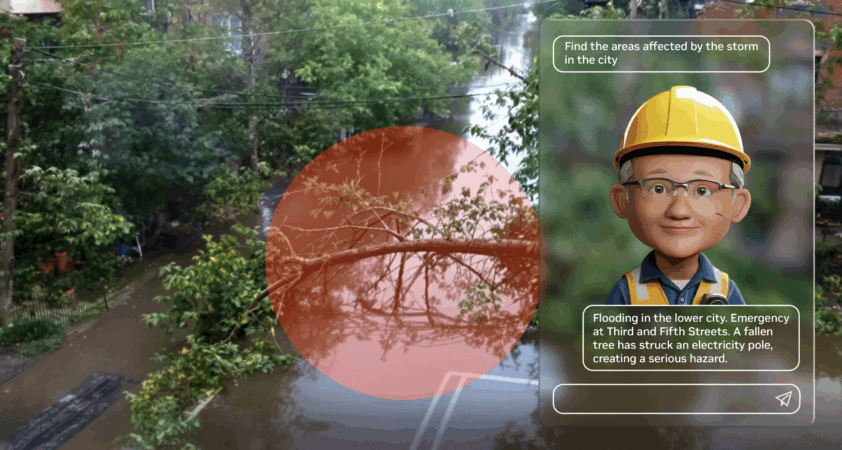
Agentic intelligence powered by vision language models (VLMs) can help bridge this gap, giving teams quick, easy access to key insights and analyses that connect text descriptors with spatial-temporal information and billions of visual data points captured by their systems every day. (View Highlight)
Three approaches organizations can use to boost their legacy computer vision systems with agentic intelligence are to:
• Apply dense captioning for searchable visual content.
• Augment system alerts with detailed context.
• Use AI reasoning to summarize information from complex scenarios and answer questions. (View Highlight)
Traditional convolutional neural network (CNN)-powered video search tools are constrained by limited training, context and semantics, making gleaning insights manual, tedious and time-consuming. CNNs are tuned to perform specific visual tasks, like spotting an anomaly, and lack the multimodal ability to translate what they see into text. (View Highlight)
Businesses can embed VLMs directly into their existing applications to generate highly detailed captions of images and videos. These captions turn unstructured content into rich, searchable metadata, enabling visual search that’s far more flexible — not constrained by file names or basic tags. (View Highlight)
For example, automated vehicle-inspection system UVeye processes over 700 million high-resolution images each month to build one of the world’s largest vehicle and component datasets. By applying VLMs, UVeye converts this visual data into structured condition reports, detecting subtle defects, modifications or foreign objects with exceptional accuracy and reliability for search. (View Highlight)
VLM-powered visual understanding adds essential context, ensuring transparent, consistent insights for compliance, safety and quality control. UVeye detects 96% of defects compared with 24% using manual methods, enabling early intervention to reduce downtime and control maintenance costs. (View Highlight)